How Cofferdams Let Engineers Work on “Dry Ground” Inside a River
Cofferdams are one of the smartest ways engineers build bridge foundations in rivers without fighting the water directly. This simple guide explains what a cofferdam is, how it works step by step, and why dry season construction often makes the job safer and easier.

If you have ever watched a bridge being built across a river and wondered how concrete work happens in water, one common answer is this: engineers first create a temporary barrier that keeps water out.
That barrier is called a cofferdam.
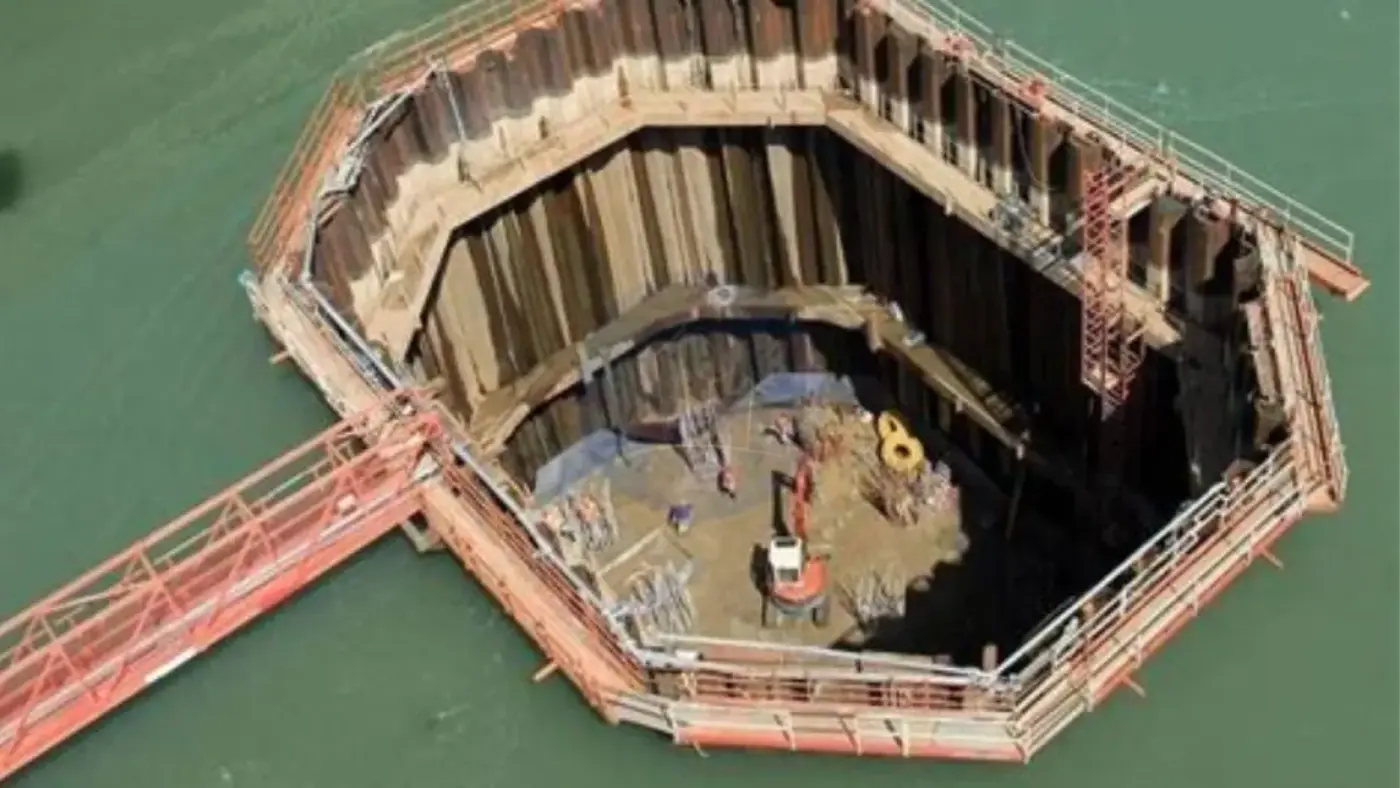
A cofferdam is a temporary watertight enclosure built in a river, lagoon, or any water body so engineers can pump the water out and work on the foundation in a dry, controlled space.
You can think of it as creating a small “dry room” inside water, just long enough to build the foundation properly.
Water makes foundation work difficult because it:
A cofferdam gives engineers control, and control improves quality.
Engineers often consider a cofferdam when:
In Nigeria, it is often better to carry out major river foundation work during the dry season, when water levels are lower and currents are calmer. That usually makes pumping easier and reduces the risk of flooding the work area.
Here is the process in plain language.
Step 1: Mark the exact foundation location
Surveyors set out the pier position accurately, because a small error below can affect the whole bridge alignment above.
Step 2: Build a closed wall around the work area
A strong wall is installed in a loop around the foundation spot, forming an enclosure that limits water entry.
Step 3: Strengthen the enclosure
Water pressure and soil pressure can push the walls inward, so internal bracing is added to keep the enclosure stable.
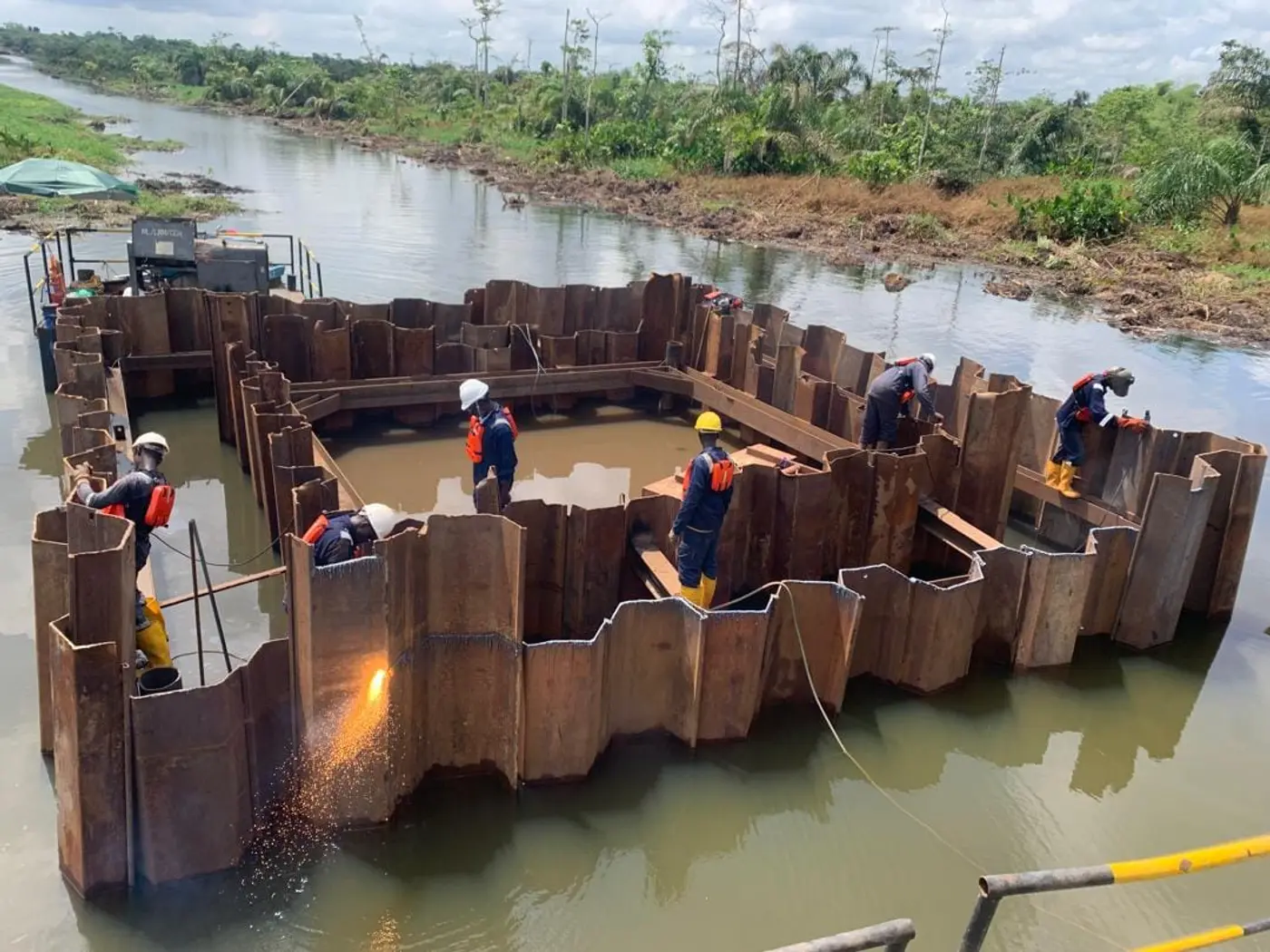
Step 4: Pump water out
Pumps remove water inside the enclosure until the area is dry enough for safe excavation and concrete work. Small leaks are normal, the goal is to keep inflow lower than pumping capacity.
Step 5: Excavate and prepare the base
With water controlled, the team excavates to the required depth, removes weak material, and prepares a stable base. This is a major advantage of cofferdams, it allows proper ground preparation.
Step 6: Place reinforcement and cast the foundation
Steel reinforcement is placed and checked, then concrete is poured under controlled conditions, similar to working on land. This improves inspection, concrete quality, and foundation accuracy.
Step 7: Remove the cofferdam after the foundation gains strength
Once the foundation is strong enough, the cofferdam is removed and the pier construction continues above water.
Cofferdams are one of the most practical ways engineers temporarily create a dry work zone inside a river, so bridge foundations can be built with better control and quality. The key idea is simple: bridges over water are built more safely when the water is controlled first, and planning major foundation work for the dry season often makes that easier.
Get an email when a new article is published.


Comments
Be the first to comment.